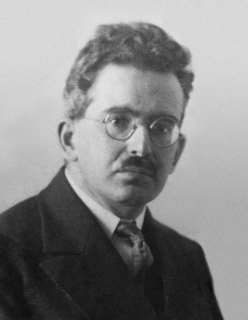
Walter Benjamin
Full Name: Walter Bendix Schönflies Benjamin
Birthdate: July 15, 1892
Birthplace: Berlin, German Empire
Date of Death: September 26, 1940
Occupation: Author and Philosopher
Profile: Best known for
The Arcades Project.
Website: https://www.wbenjamin.org/
Number of Quotes: 51
A chronicler who recites events without distinguishing between major and minor ones acts in
accordance with the following truth: nothing that has ever happened should be regarded as lost for history.
On the Concept of History (Thesis III) (1940)
All disgust is originally disgust at touching.
All human knowledge takes the form of interpretation.
Ambiguity is the manifest imaging of dialectic, the law of dialectics at a standstill.
One-Way Street (1928)
Art in the age of mechanical reproduction is stripped of its aura
.
The Work of Art in the Age of Mechanical Reproduction (1935)
Behind every fascism, there is a failed revolution.
Attributed (often paraphrased from Theses on the Philosophy of History).
Books and harlots have their quarrels in public.
Boredom is the dream bird that hatches the egg of experience. A rustling in the leaves drives him away.
Capitalism is a religion without dogma.
Capitalism as Religion (1921)
Counsel woven into the fabric of real life is wisdom.
Death is the sanction of everything the story-teller can tell. He has borrowed his authority from death.
Even the dead will not be safe from the enemy if he wins.
On the Concept of History (Thesis VI) (1940)
Every image of the past that is not recognized by the present as one of its own concerns threatens to disappear irretrievably.
On the Concept of History (Thesis V)
Every passion borders on the chaotic, but the collector's passion borders on the chaos of memories.
Genuine polemics approach a book as lovingly as a cannibal spices a baby.
Gifts must affect the receiver to the point of shock.
Glass is, in general, the enemy of secrets. It is also the enemy of possession.
Experience and Poverty
He who cannot take sides should keep silent.
Journal entry (1931).
He who observes etiquette but objects to lying is like someone who dresses fashionably but wears no vest.
History is the subject of a structure whose site is not homogeneous, empty time, but time filled by the presence of the now.
On the Concept of History (Thesis XIV)
In every era the attempt must be made anew to wrest tradition away from a conformism that is about to overpower it.
On the Concept of History (Thesis VI)
It is more arduous to honor the memory of the nameless than that of the renowned.
On the Concept of History (Thesis II)
It is only for the sake of those without hope that hope is given to us.
It is precisely the purpose of the public opinion generated by the press to make the public
incapable of judging, to insinuate into it the attitude of someone irresponsible, uninformed.
Language is the archive of shared human experience.
On Language as Such and on the Language of Man (1916)
Living substance conquers the frenzy of destruction only in the ecstasy of procreation.
Memory is not an instrument for exploring the past but its theatre. It is the medium
of past experience, as the ground is the medium in which dead cities lie interred.
Berlin Chronicle (1932)
No poem is intended for the reader, no picture for the beholder, no symphony for the listener.
Nothing is poorer than a truth expressed as it was thought.
One-Way Street (1928)
Of all the ways of acquiring books, writing them oneself is regarded as the most praiseworthy method. Writers are really people
who write books not because they are poor, but because they are dissatisfied with the books which they could buy but do not like.
Only for the sake of the hopeless ones have we been given hope.
Goethe's Elective Affinities (1924)
Opinions are a private matter. The public has an interest only in judgments.
Opinions are to the vast apparatus of social existence what oil is to machines: one does not go up to a
turbine and pour machine oil over it; one applies a little to hidden spindles and joints that one has to know.
Quotations in my work are like wayside robbers who leap out armed and relieve the stroller of his conviction.
One-Way Street (1928)
Revolution is the emergency brake on the train of history.
Attributed (paraphrase of Thesis XV).
Storytelling is always the art of repeating stories.
The Storyteller (1936)
The adjustment of reality to the masses and of the masses to reality is a process of unlimited scope, as much for thinking as for perception.
The art of storytelling is reaching its end because the epic side of truth, wisdom, is dying out.
The Storyteller (1936)
The art of the critic in a nutshell: to coin slogans without betraying ideas. The slogans of an inadequate criticism peddle ideas to fashion.
The camera introduces us to unconscious optics as does psychoanalysis to unconscious impulses.
The Work of Art in the Age of Mechanical Reproduction (1935)
The concept of progress must be grounded in the idea of catastrophe.
Central Park (1939)
The construction of life is at present in the power of facts far more than convictions.
The destructive character lives from the feeling, not that life is worth living, but that suicide is not worth the trouble.
The greater the decrease in the social significance of an art form, the sharper the distinction between criticism and
enjoyment by the public. The conventional is uncritically enjoyed, and the truly new is criticized with aversion.
The idea that happiness could have a share in beauty would be too much of a good thing.
The only way of knowing a person is to love them without hope.
Letter to Gershom Scholem (1930).
The true picture of the past flits by. The past can be seized only as an image
which flashes up at the instant when it can be recognized and is never seen again.
There is no document of civilization which is not at the same time a document of barbarism.
On the Concept of History (Thesis VII)
To articulate the past historically does not mean to recognize it the way it really was
.
On the Concept of History (Thesis VI)
To be happy is to be able to become aware of oneself without fright.
Work on good prose has three steps: a musical stage when it is composed, an architectonic one when it is built, and a textile one when it is woven.
Letter to Gerhard Scholem (1934).

 Last on Earth